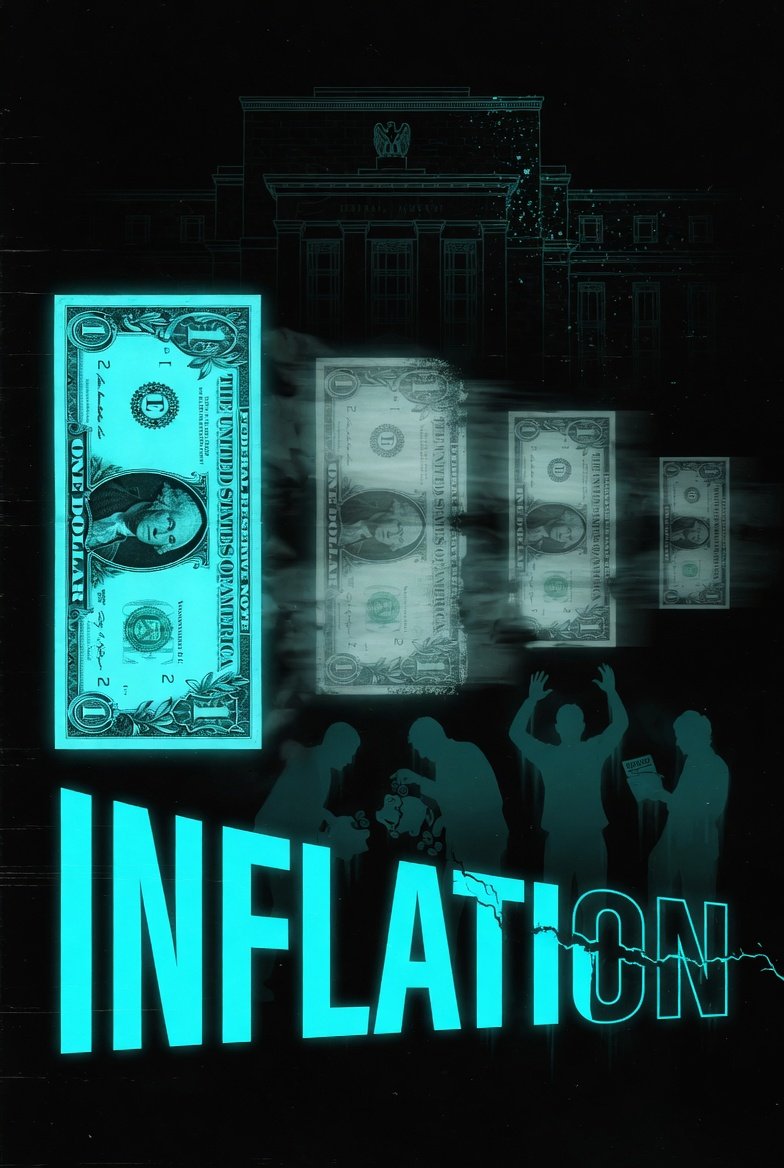
Inflation is a Thief: The Silent Tax on the Ohio Blue-Collar Worker
Steal slowly enough and nobody calls it robbery.
Your grandfather made $4 per hour in 1972. That was excellent money. Enough to raise a family, buy a
house, retire with a pension.
That same job pays $28 per hour today. Seven times as much. You should be seven times wealthier.
You’re not.
Because inflation has stolen six-sevenths of your wage growth.
Here’s the math:
1972: $4/hour × 2,000 hours/year = $8,000/year.
Today: $28/hour × 2,000 hours/year = $56,000/year.
That sounds like a 7× increase. But adjust for inflation:
$4/hour in 1972 = roughly $32/hour in 2024 dollars.
$28/hour today = $28/hour today.
The real wage has decreased. Your grandfather made more per hour (inflation-adjusted) than you do
now, doing the same job.
Inflation stole the difference.
How inflation works as a tax:
Inflation happens when the money supply expands faster than the economy grows. If the money
supply doubles but the economy stays the same size, each dollar is worth half as much.
This is a tax that nobody voted on. Nobody approved. Nobody can escape (unless you own Bitcoin).
The government doesn’t call it a tax because that would be transparent. They call it “monetary policy”
and “stimulus.” They bury it in Fed press releases. They calculate it in ways that make it look smaller
than it is.
The official inflation number is often lower than real inflation. The government changed how inflation is
calculated in 1983 to make it look less severe. Since then, official inflation has been consistently lower
than what people actually experience.
Food costs more. Rent costs more. Gas costs more. Medical care costs more. But the government says
inflation is only 3-4% per year. The discrepancy is mathematics.
The mechanism of theft:
You earn $100. You put it in a savings account at 0.5% interest (if you can find that). The bank pays
you $0.50 in interest.
Inflation is 4%. That $100 is now worth $96.
You lost $3.50 of purchasing power. The bank gained $3 in interest revenue (0.5% × $100 = $0.50
paid to you, but they’re earning 4% spread on your deposit = roughly $4 earned by the bank, minus
$0.50 paid = $3.50 net gain).
Your loss is the bank’s gain. But more importantly: your loss is the Fed’s gain.
When the Fed prints money and injects it into the economy (through government spending, through
bank lending, through quantitative easing), the newly printed money immediately starts degrading the
purchasing power of existing money.
This newly printed money goes to government and banks first. They spend it at the old (higher) pur‐
chasing power level. By the time the money reaches regular people, prices have already adjusted up‐
ward.
The wealth transfer:
Inflation transfers wealth from savers to borrowers. From workers to asset owners. From people living
paycheck to paycheck to people who own real estate, stocks, and businesses.
The Fed claims this is necessary. They say inflation encourages spending and investment. That’s true.
It also destroys the wealth of people who can’t afford to invest.
Your grandfather could save money on a factory worker’s wage. He could accumulate wealth. He could
retire.
You can barely keep up. Your wage doesn’t keep pace with inflation. By the time you save anything,
inflation has eroded its value.
The latchkey kid understood this early. He had to make every dollar count. He couldn’t afford to waste
money on wants when his family struggled with needs.
Inflation makes the same calculation impossible at a macro level. Workers can’t save because savings
are eroded. So they borrow. They go into debt. They become dependent on credit. They become vul‐
nerable.
That’s the trap. That’s how the system transfers wealth upward.
Why this matters specifically to blue-collar workers:
Blue-collar wages are sticky. They don’t rise as fast as inflation. They’re negotiated every few years.
There’s a lag.
Meanwhile, asset prices (stocks, real estate) rise with inflation. Sometimes faster.
If you’re a factory worker whose wage rises 2% per year but inflation is 4%, you’re losing 2% of
purchasing power every year.
If you’re a real estate investor whose property appreciates with inflation (4-6% per year), you’re
gaining wealth every year.
This widens the gap. Workers get poorer (relative to inflation). Asset owners get richer.
Bitcoin stops this. Bitcoin’s supply is fixed. Inflation is zero. Your Bitcoin can’t be debased by Fed
money printing.
If you save in Bitcoin, you’re saving in something that no institution can inflate away.
That’s not a get-rich scheme. That’s just basic protection against theft.