Cybersecurity for the Self-Reliant: Protecting Your Seed Phrases
One string of twelve words. Don’t lose it. Don’t tell anyone.
Your seed phrase is everything. It’s twelve or twenty-four words that reconstruct your Bitcoin wallet.
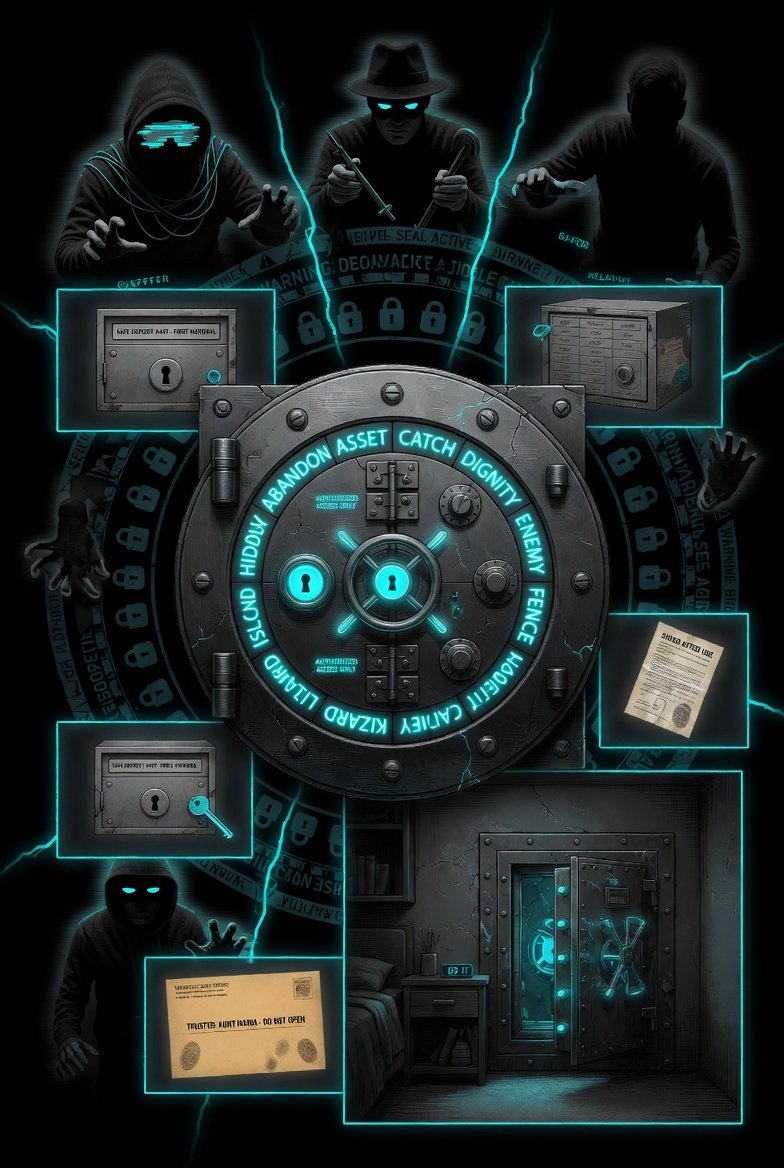
If you lose it, your Bitcoin is gone forever. If someone else gets it, they own your Bitcoin forever.
Protecting your seed phrase is the most important security task you can do.
What is a seed phrase?
When you create a Bitcoin wallet, the software generates a seed phrase. Example (not a real key):
“abandon ability able about above absence absorb abstract abstain access accident account accuse
achieve acid acoustic acquired…”
This phrase encodes all the information needed to recreate your wallet. If your computer dies, you can
recover your wallet using this phrase on any new computer.
If someone gets your phrase, they can access your Bitcoin from any computer. They don’t need your
password. They don’t need your hardware. They don’t need anything except the phrase.
How to protect it:
1 . Write it down.
Don’t store it digitally. Digital storage is vulnerable to hacks, ransomware, and theft.
Write it on paper. Keep the paper in a safe.
2 . Use metal backup.
Paper burns. Fire is the enemy of paper. Buy a metal plate designed for seed phrase backup. Stamp or
engrave your phrase into the metal. Metal survives fire, water, time.
Cost: $100-300. Security: Excellent.
3 . Store multiple copies.
Store one copy at home in a safe. Store another copy at a bank’s safety deposit box. Store a third copy
with a trusted family member.
This provides redundancy. If your house burns down, you have backups.
4 . Never type it digitally.
Never put your seed phrase in an email. Never text it. Never store it in a note-taking app. Never put it
in a cloud service.
Digital copies are vulnerable to hacking. Once it’s on a digital device connected to the internet,
assume it’s compromised.
5 . Only use hardware wallets to generate seed phrases.
Don’t generate seed phrases on your regular computer. Use a hardware wallet (Ledger, Trezor) that
generates the phrase offline.
6 . Verify recovery.
After you back up your seed phrase, verify it works. Create a test wallet on a separate device. Recover
from your backup. Make sure it works.
Don’t wait until you need it to discover your backup is wrong.
7 . Compartmentalize knowledge.
Don’t tell anyone your seed phrase. Not your spouse. Not your children. Not your lawyer. Nobody.
If you want your heirs to have your Bitcoin, write down clear instructions on how to find the backup (in
a separate location). Don’t give them the phrase itself.
Threats to your seed phrase:
Physical theft:
Someone breaks into your home and steals your metal backup. Now they own your Bitcoin.
Defense: Store backups in multiple locations. Use a safety deposit box.
Hacking:
You store your phrase digitally (even encrypted). A hacker gains access and decrypts it.
Defense: Only store on paper and metal. Never digitally.
Malware:
Software on your computer records every keystroke. You type your seed phrase. The malware captures it.
Defense: Never type your seed phrase into any digital device.
Supply chain attack:
You buy a hardware wallet. It’s already been compromised during manufacturing.
Defense: Buy from official sources. Verify authenticity. Use multiple devices.
Social engineering:
Someone pretends to be customer support. “We need your seed phrase to verify your account.”
They’re lying.
Defense: Never share your seed phrase with anyone. Ever.
Death without instructions:
You die. Your heirs don’t know where the backup is or how to recover it.
Defense: Write clear instructions. Store them separately. Consider sharing with a trusted lawyer or
family member (but not the phrase itself).
The latchkey mindset:
The latchkey kid kept his own key. He didn’t give it to anyone. He didn’t lose it. He understood that the
key was everything.
Your seed phrase is your key. Keep it. Protect it. Don’t lose it. Don’t share it.