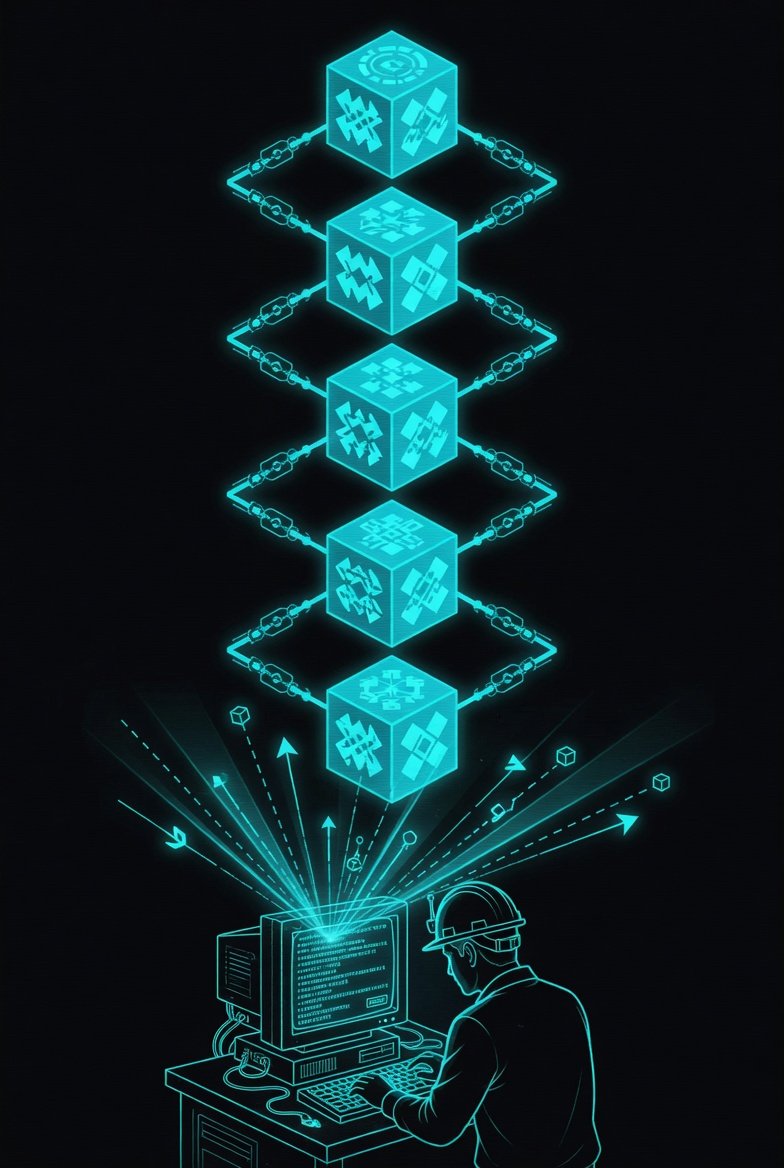
The Digital Ledger: Proof of Work Explained Through Physical Labor
Sweat doesn’t lie. Neither does computation.
Dad came home from the mill covered in sweat. Twelve-hour shift. The work was visible. You could see
the output — steel bars, finished parts, the physical evidence of labor.
That’s Proof of Work.
Bitcoin miners don’t dig holes. They solve mathematical puzzles. The work is invisible. The output is
computational. But the principle is identical: you do work, you get paid.
Here’s why this matters:
Without Proof of Work, Bitcoin is just a spreadsheet someone can manipulate.
With Proof of Work, Bitcoin is an immutable ledger that requires more electricity than some countries
use to change one entry.
Proof of Work is the mechanism that makes Bitcoin secure, immutable, and trustworthy.
Here’s how it works:
Every ten minutes, Bitcoin miners around the world compete to solve a cryptographic puzzle. It’s not a
math problem you can solve with intelligence. It’s a problem that requires pure computational power
— billions of guesses per second.
The first miner to solve the puzzle gets to add the next “block” to the ledger. That block contains re‐
cent transactions. Once it’s added, the block is locked in place and becomes part of the permanent re‐
cord.
The winning miner gets paid for their work — a block reward (new Bitcoin) plus transaction fees.
The math is set up so the puzzle gets harder as more miners compete, maintaining roughly ten-minute
blocks. More competition, harder puzzle, same time.
Now here’s the security innovation:
If you wanted to change a past transaction — to “unspend” Bitcoin you already sent — you’d have to:
- Recompute the puzzle for that block
- Recompute all the puzzles for all the blocks that came after
- Do this faster than the entire network is creating new blocks
That’s practically impossible. The computational cost is astronomical. You’d spend more on electricity
than the Bitcoin you’re trying to steal.
That’s Proof of Work. The work is expensive. The outcome is visible. The ledger is secure.
The latchkey kid understood this instinctively. If you wanted to claim you did work you didn’t do,
someone would notice. The dishes would still be dirty. The lawn would still be unmowed. The work
either happened or it didn’t.
Bitcoin works the same way. You can’t fake the work. You can’t claim you solved the puzzle if you
didn’t. The network verifies it. The math doesn’t lie.
Compare this to traditional finance: the bank’s ledger is digital. It exists in a database they control. If
the bank wants to change it, they can. If a government orders them to change it, they must. The
ledger is only secure if you trust the institution.
Bitcoin has no institution. The ledger is secured by millions of miners around the world. They all have
to agree on the state of the ledger, and they verify that agreement through Proof of Work.
You can’t bribe all the miners. You can’t pressure all the miners. You can’t control the majority of
computational power without spending more than most nations’ GDP.
That’s the security model.
Why it matters:
In traditional banking, settlements take days. Transactions are provisional. They can be reversed. The
ledger is a work in progress.
In Bitcoin, transactions are final in ten minutes. Irreversible in an hour (typically after six
confirmations). The ledger is permanent.
That finality is backed by Proof of Work. The more blocks that come after your transaction, the more
computational power would be required to reverse it. After a few hours, reversing it is literally im‐
possible.
That’s security that doesn’t require trust.
The military understands this. Distributed systems with cryptographic verification are more secure
than centralized systems protected by passwords.
Bitcoin is that principle applied to money.